The decision to invest in industrial robotics is no longer determined solely by a company's size. Today, businesses across a wide range of industries are adopting automation to increase productivity, improve product quality, and address the growing shortage of skilled labour. However, before moving forward with an automation project, one question almost always arises: What will the return on investment be?
Return on Investment (ROI) is one of the most important indicators for assessing whether an automation project makes financial sense. However, limiting this analysis to the cost of the robot, the remaining equipment, and labour cost savings is a common mistake. In this article, we explain how to calculate the ROI of an industrial robotics solution, the factors that influence investment returns, and why, in most cases, the benefits extend far beyond cost reduction.
What Does ROI Really Mean in Industrial Robotics?
The term ROI (Return on Investment) is widely used to measure the profitability of an investment. Simply put, it represents the relationship between the amount invested and the financial benefits generated over time. The faster the investment is recovered and the greater the financial return, the more attractive the project becomes. In the context of industrial robotics, ROI is commonly used to answer key questions such as:
- How long will it take to recover the investment?
- What savings can the company expect?
- What impact will the project have on productivity?
- Will the project improve the overall profitability of the operation?
Although these questions appear straightforward, the answers rarely are.
Why ROI Is About More Than Labour Cost Reduction
When discussing industrial robotics, ROI is often associated solely with labour cost savings. In reality, this represents only part of the equation. Automation can increase production capacity without expanding facilities, improve product quality by reducing defects, rework, and waste, and ensure greater process consistency. It also helps companies address the growing challenge of recruiting workers for repetitive tasks, allowing employees to focus on higher-value activities.
In many automation projects, the greatest financial impact comes from increased productivity, improved quality, and greater operational continuity rather than simply reducing the number of operators.
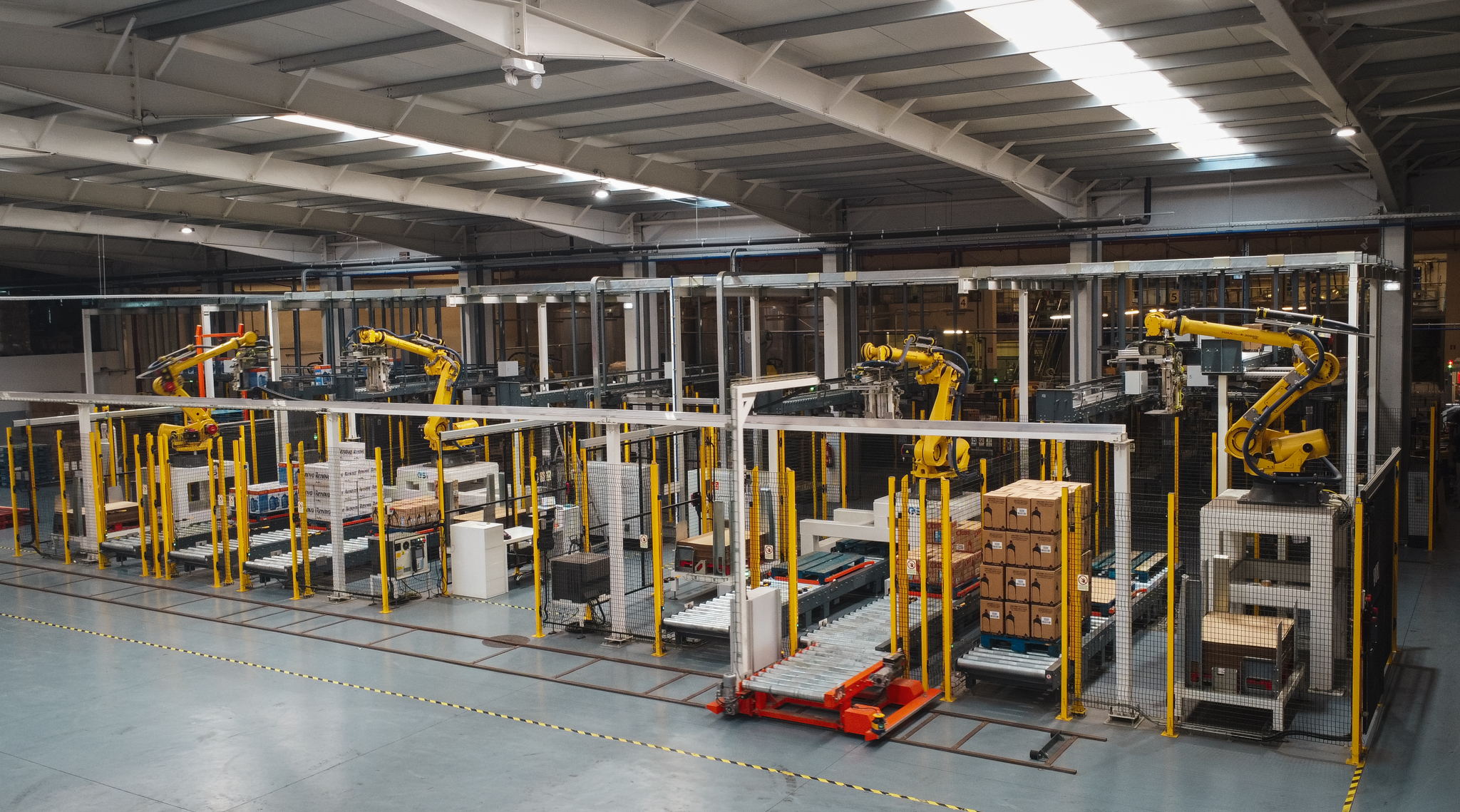
Evaluating the ROI of a robotics project, therefore, requires a comprehensive view of the entire operation. Beyond equipment costs, companies must assess the solution's impact on productivity, operating costs, quality, and overall competitiveness.
As a result, two seemingly similar projects can generate significantly different returns depending on the production process, business objectives, and how the solution is implemented. Only a thorough analysis can provide a reliable ROI calculation and support informed investment decisions.
How to Calculate the ROI of an Industrial Robotics Project
Once it is clear that ROI goes far beyond labour cost savings, the next question naturally follows: How can a company estimate the expected return from an automation project? There is no universal formula, as every production process has unique characteristics and objectives. Before performing any calculations, it is essential to assess the company's current situation by analysing key performance indicators such as cycle time, production capacity, waste rates, operating costs, production downtime, and quality levels. In manufacturing, project profitability is generally assessed using two key metrics: Return on Investment (ROI), which measures the relationship between the investment made and the benefits achieved; Payback Period, which indicates how long it will take to recover the investment.
However, these metrics are only reliable when all project costs are taken into account, including equipment, system integration, installation, programming, and training.
ROI (%) = ((Total Benefits – Investment) ÷ Investment) × 100
Payback Period = Total Investment ÷ Annual Financial Benefits
Likewise, the financial benefits extend well beyond operating cost savings. Increased productivity, improved quality, reduced waste, and higher equipment availability can represent a significant portion of the overall return. For example, an automated palletising project requiring an investment of €180,000 could achieve payback in approximately 20 months if it generates annual benefits of around €105,000, including:
- €50,000 in annual operating cost savings
- €40,000 in additional production capacity
- €15,000 in reduced material waste
Although this is only an illustrative example, it demonstrates that investment returns depend far more on the characteristics of the production process than on the technology itself. This is precisely why two companies implementing similar robotic solutions may achieve very different financial outcomes.

Is Investing in Industrial Robotics Worth It?
In most cases, the answer is yes. However, the outcome always depends on the production process, the company's objectives, and the opportunities available for improvement. A detailed technical and financial assessment makes it possible to identify which operations offer the greatest automation potential. This approach ensures that every investment addresses genuine business needs.